

Steampunk Model Kits: The Ultimate Guide to Building Your Own Industrial Fantasy
Brass gears clicking into place. Rivets that catch the light just right. Machinery that looks like it wandered out of a Victorian workshop and decided to stay. That's the world of steampunk model kits, and honestly, once you've watched a pile of loose metal parts turn into something that feels almost alive, other hobbies start to feel a bit flat by comparison.
At Mecrob, our kits mix new components with genuine reclaimed hardware. Nothing gets added just to bulk out a box. Every screw earns its place, and every gear does a job.
What Makes Steampunk Kits So Different
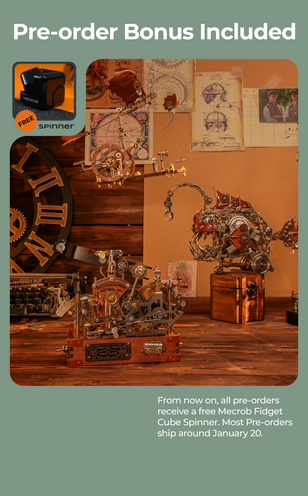
Steampunk isn't really a style, not in the strict sense anyway. It's more of a mood, half Victorian engineering, half a daydream about machines that never quite existed.
The Visual Language
A few traits show up again and again in these builds:
• Exposed mechanisms, gears, and pistons you can watch turning, not hidden behind a smooth plastic shell
• Aged metal finishes that mimic copper, tarnished brass, or rust that's been sitting outside for decades
• Functional details where parts genuinely move, rather than just looking like they might
• Fantasy meeting machinery, so a creature or a vehicle gets built from gears instead of fur or steel plating alone
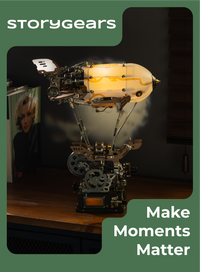
We push hard on this with builds like StoryGears. The kinetic movement there isn't a bonus feature tacked on at the end. It's basically the whole reason the kit exists.
Why Builders Love Them
Putting together a steampunk kit doesn't feel like most other hobbies, not quite. There's a rhythm to it that sneaks up on you. Click a gear in. Tighten a bolt. Watch a wing unfold slightly, almost on its own. Small wins, stacked one after another until, somehow, hours have passed.
Our community keeps growing, and we think that feeling is exactly why. Over 20,000 makers have built something with Mecrob so far, and honestly, most of them started with zero experience.
Choosing Your First Steampunk Build
Not every kit suits every person picking it up. Choosing the right one matters more than most beginners realize, at least at first.
For Complete Beginners
Starting small isn't a weak move, it's just smart. Kits labelled "easy difficulty" tend to have:
1. Fewer total parts overall
2. Clear, numbered instructions that don't assume prior experience
3. Basic tools, nothing specialised
4. Shorter build times, often under an hour once you get going
For Experienced Hobbyists
If detailed assembly work already feels comfortable, layered mechanisms will push you further. Anything in our difficult category fits that bill, and kits like Aetherrotor or Aetherwings reward the extra patience they demand.
Questions Worth Asking First
• How much spare time do I actually have most weeks, not in theory?
• Am I after something purely decorative, or do I want it to move too?
• Building solo, or is this a shared project with someone else?
That last one matters more than it sounds. Steampunk kits work surprisingly well as a two-person activity, quiet evening, hands busy, no real pressure to talk unless you feel like it.

The Sustainability Angle Nobody Talks About Enough
Every steampunk kit we design starts from one idea, really. Scrap metal deserves a second chance before it ends up buried somewhere.
Discarded hardware gets sorted, cleaned, reshaped, and eventually becomes puzzle components instead of landfill waste. Small act on its own, sure. But it adds up fast across thousands of builds. Mecrob Remake has run on this philosophy since 2012, and it still shapes what we release today.
Picking an upcycled kit over something disposable isn't just about how it looks on a shelf. It's a quiet form of doing right by the planet, one gear at a time.
Tips for a Smoother Build Experience
A few things we've picked up over the years, worth knowing before you start:
• Work under good lighting. Small parts vanish into shadows more easily than you'd expect.
• Sort pieces early. Group by size, by number, or whatever system actually makes sense to you.
• Take breaks. Rushing a steampunk build tends to backfire.
• Keep the manual nearby, even on a second or third build. Details shift between kits more than people assume.
• Never force a part. Resistance usually means something's off, not that you need more elbow grease.
Simple stuff. Saves real frustration later, though.
Gifting a Steampunk Kit
These kits make genuinely good gifts, better than most people expect. A finished model sits on a shelf as proof of effort, long after a gadget's charm has worn off.
Match the kit to the person if you can:
• Mechanically curious people tend to enjoy visible, moving parts
• Collectors lean toward limited- or premium- builds.
• Beginners do best with easier kits that deliver quick, satisfying results.
Whatever the occasion, a steampunk kit says something a shop-bought item usually can't.
Final Thoughts on Building Your Own Industrial Fantasy
Steampunk model kits offer something increasingly rare, a slow, hands-on hobby that ends with something you can actually hold and point to. Every gear turned, every panel clicked into place, becomes part of a story that's genuinely yours.
At Mecrob, we'll keep turning forgotten materials into kits worth building, worth displaying, and worth talking about. If you've been thinking about your first steampunk project, there's really no better time than now to start one.