

What Makes Metal DIY Model Kits Different From Traditional Model Kits
At Mecrob® Remake, we get this question a lot from folks walking by our design workshop or browsing online. They ask us, "Hey, how are these heavy, shiny things any different from the classic plastic airplanes I glued together as a kid?"
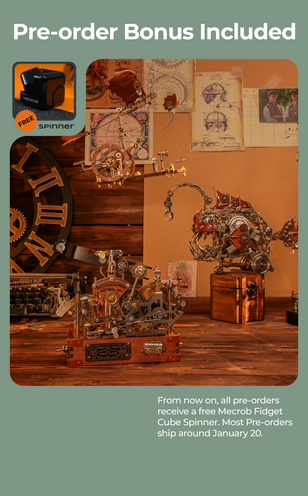
It is a fair question. Traditional modeling has a massive history. But metal DIY kits are an entirely different beast. We are not talking about snapped plastic or messy glue bottles. We are talking about raw, recycled industrial hardware turning into kinetic art right on your kitchen table. Let us dive into what makes this switch so wild.
The Real Core Differences: Metal vs. Traditional
|
Feature |
Mecrob Metal Model Kits |
Traditional Plastic/Wood Kits |
|
Main Material |
Recycled stainless steel, brass, hardware |
Polystyrene plastic, balsa wood |
|
Assembly Tool |
Precision pliers, tweezers, screws, nuts |
Toxic glue, cement, hobby knives, paint |
|
Lifespan |
Decades (rust-resistant, solid weight) |
Brittle over time, easy to snap or melt |
|
Interactivity |
Kinetic gears, moving joints, real weight |
Mostly static, fixed poses |

The "Oh Wow" Factors: Why Metal Hits Different
• No Messy Chemical Glue: Remember getting model cement all over your fingers? Or ruining a plastic canopy with a single stray drop of superglue? Yeah, we hate that too. Metal kits use micro-screws, nuts, and precise interlocking tabs. It feels more like real engineering and less like an arts-and-crafts accident.
• That Satisfying Physical Weight: When you pick up a finished Cyber Meta piece, it has actual heft. It feels expensive. It feels permanent. Plastic models can feel like, well, cheap toys once they are done.
• Built-in Kinetic Movement: Many traditional kits just sit there on a shelf gathering dust. Metal kits often incorporate real mechanical principles. You get gears that turn, limbs that pose on tight joints, and wings that actually move.
• Eco-Friendly Roots: At Mecrob® Remake, we love giving discarded hardware a second life. You are building something out of materials that might have otherwise ended up in a scrap heap. It is sustainable art.
Helpful Tips for Your First Metal Build
If you are used to plastic and want to try your hand at metal engineering, here is our quick survival guide. First, do not rush the tabs. Bending a metal tab back and forth too many times will snap it, just like a paperclip. Second, use the right tools. We pack specialized precision pliers in our kits for a reason; household pliers are just too bulky for micro-screws. Lastly, keep your workspace clean. Dropping a 2mm nut onto a shag carpet is a tragedy you want to avoid. Trust us on that one.
FAQs
Do I need to buy special tools to build a metal kit?
No, we include all the precision pliers and tweezers you need right inside the box.
How long does a standard metal puzzle take to build?
Depending on the complexity level, it usually takes anywhere from 4 to 12 hours of focused fun.
Are these kits safe for younger kids to build alone?
We recommend them for teens and adults because the small screws and metal edges require careful handling.
Can I take the model apart and rebuild it later?
Yes, because our kits use screws and nuts instead of glue, you can completely disassemble them.
What happens if I accidentally lose a tiny screw?
We always include extra spare hardware in the box, and we sell replacement part packs if needed.
Read More:
What Skills Do You Develop by Building 3D Mechanical Puzzles?